Vendor Versus Generic Device Models
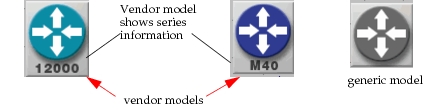
Device models are also categorized into two classes: vendor device models and generic device models. Vendor models represent devices manufactured by a particular company, such as Cisco Systems or 3Com. The developers of the standard model library use data published by these manufacturers to characterize the devices as well as they can. You can also create vendor device models using the Device Creator operation, provided you have obtained values for required parameters of the device.
Generic models provide behavior that is correct for devices of their class. However, they are not configured to model any particular manufacturer’s devices. Instead these devices provide attributes (that is, parameters), allowing you to configure each one you deploy differently if you choose. For example, the generic router below offers the forwarding rate attribute, which specifies the throughput of the router in packets per second. Each instance of the router that is deployed can be assigned its own forwarding rate. In contrast, a vendor device model of a router would already be aware of its own forwarding rate, as you would expect because the device type is already known. A vendor model would therefore have a preconfigured forwarding rate attribute that is consistent with the actual router’s forwarding rate.
Figure 19: Generic Model vs. Vendor Model