Appendix II: UMTS Protocol Background
The packet domain core network includes two network nodes: the serving GPRS support node (SGSN) and the gateway GPRS support node (GGSN). The GPRS support nodes (GSNs) includes all the GPRS functionality required to support GSM and UMTS packet services. Using the notation defined in Figure 617, 3G-SGSN and 3G-GGSN refer to the UMTS functionality of the SGSN and GGSN respectively. The SGSN monitors users' location and performs security functions and access control. The GGSN contains routing information for packet-switched (PS) attached users and provides interworking with external PS networks such as the packet data network (PDN). The circuit switched (CS) core network includes the mobile switching center / visitor location register (MSC/VLR). The MSC/VLR is used in the packet domain architecture to coordinate PS and CS services and functionality more efficiently.
The association between SGSN and MSC/VLR is created, for example, to coordinate users that are both GPRS-attached and IMSI (International Mobile Subscriber Identity)-attached. The Home Location Register (HLR) contains GSM and UMTS subscribers' information. The Charging Gateway Functionality (CGF) collects charging records from the SGSN and GGSN. The Equipment Identity Register (EIR) stores information about user equipment identity.
Figure 617: Overview of Packet Domain Architecture
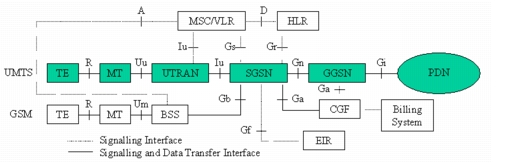
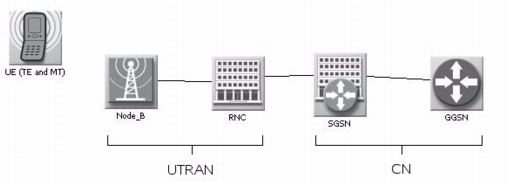
Figure 618: Equivalent Representation in Riverbed Modeler