Model Architecture: FDDI
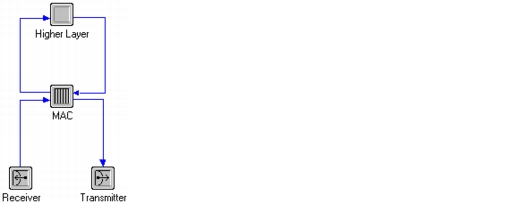
The following figure shows the relevant portions of a typical node model using the process models defined for the FDDI model suite.
Figure 138: Node Model Structure Surrounding FDDI
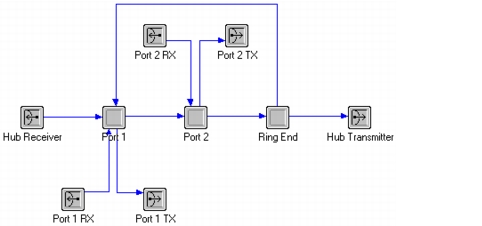
The following figure shows the relevant portions of a typical node model using the process models defined for hub operation. The process models in the hub do not contain any FDDI-specific information.
Figure 139: Node Model Structure Surrounding FDDI Hub
Process Models: FDDI
The following table lists the process models used by the FDDI model suite. Additional details on these process models are provided in subsequent sections.
Table 49: FDDI Process Models
| name | location | summary |
|---|---|---|
| fddi_gen_v4 | Higher Layer Module | Provides a simple example of a higher layer interfacing with the fddi3_mac process model. fddi_gen_v4 generates frames to other stations on the LAN. A range of destination addresses, packet arrival rate and packet length can be specified by the user. |
| fddi_hub_proc | Port Module | Implements a port in an FDDI hub. It receives and forwards packets from one interface to the next. |
| fddi_mac_v4 | MAC Module | The MAC layer of an FDDI interface. The process handles transmission requests and also packet arrival from the physical layer. |
| fddi_sink_v4 | Higher Layer Module | Provides a simple example of a higher layer process that receives data from the MAC layer. This process simply discards packets. |
| fddi_ring_out_proc | Ring End Module | Enables two hubs to be connected to each other. It forwards packets inside the hub based on the network configuration. |