Associations
The Topo package has several functions that operate on object associations. An association represents a direct relationship between two objects. This relationship indicates objects that are attached in some way, and is useful for traversing the visual representation of a network.
Note: Association in this sense does not include dynamic or implicit logical relationships that form during a simulation or analysis. For example, in wireless modeling, mobile and satellite sites are not explicitly connected with point-to-point or bus links, so only path and demand associations are possible for them. Also, wireless domains do not have associations.
Figure 12 shows a simple network and Table 40 lists the various associations for each object in that network. The following sections describe how associations are determined.
Figure 12: Simple Network
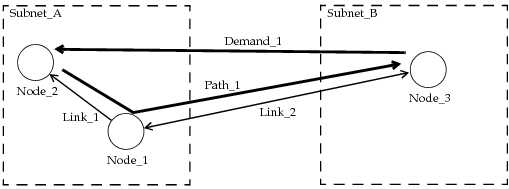
Table 40: Associations in the Simple Network
| Object | In | Out | Through | In Global | Out Global |
|---|---|---|---|---|---|
| Subnet_A | Link_2, Subnet_B | Link_2, Subnet_B | none | Link_2, Node_3 | Link_2, Node_3 |
| Link_1 | Node_1 | Node_2 | none | Node_1 | Node_2 |
| Subnet_B | Link_2, Subnet_A | Link_2, Subnet_A | Path_1 | Link_2, Node_1 | Link_2, Node_1 |
| Link_2 | Subnet_A, Subnet_B | Subnet_A, Subnet_B | Path_1 | Node_1, Node_3 | Node_1, Node_3 |
| Node_1 | none | Link_1, Node_2 | Path_1 | Link_2, Node_3 | Link_1, Link_2, Node_2, Node_3 |
| Path_1 | Node_2, Node_3 | Node_2, Node_3 | Node_1, Node_2, Node_3, Link_1, Link_2 | Node_2, Node_3 | Node_2, Node_3 |
| Node_2 | Link_1, Node_1, Path_1, Demand_1 | none | Path_1 | Link_1, Node_1, Path_1, Demand_1 | none |
| Demand_1 | Node_3 | Node_2 | none | Node_3 | Node_2 |
| Node_3 | none | Path_1, Demand_1 | Path_1 | Link_2, Node_1 | Link_2, Node_1, Path_1, Demand_1 |